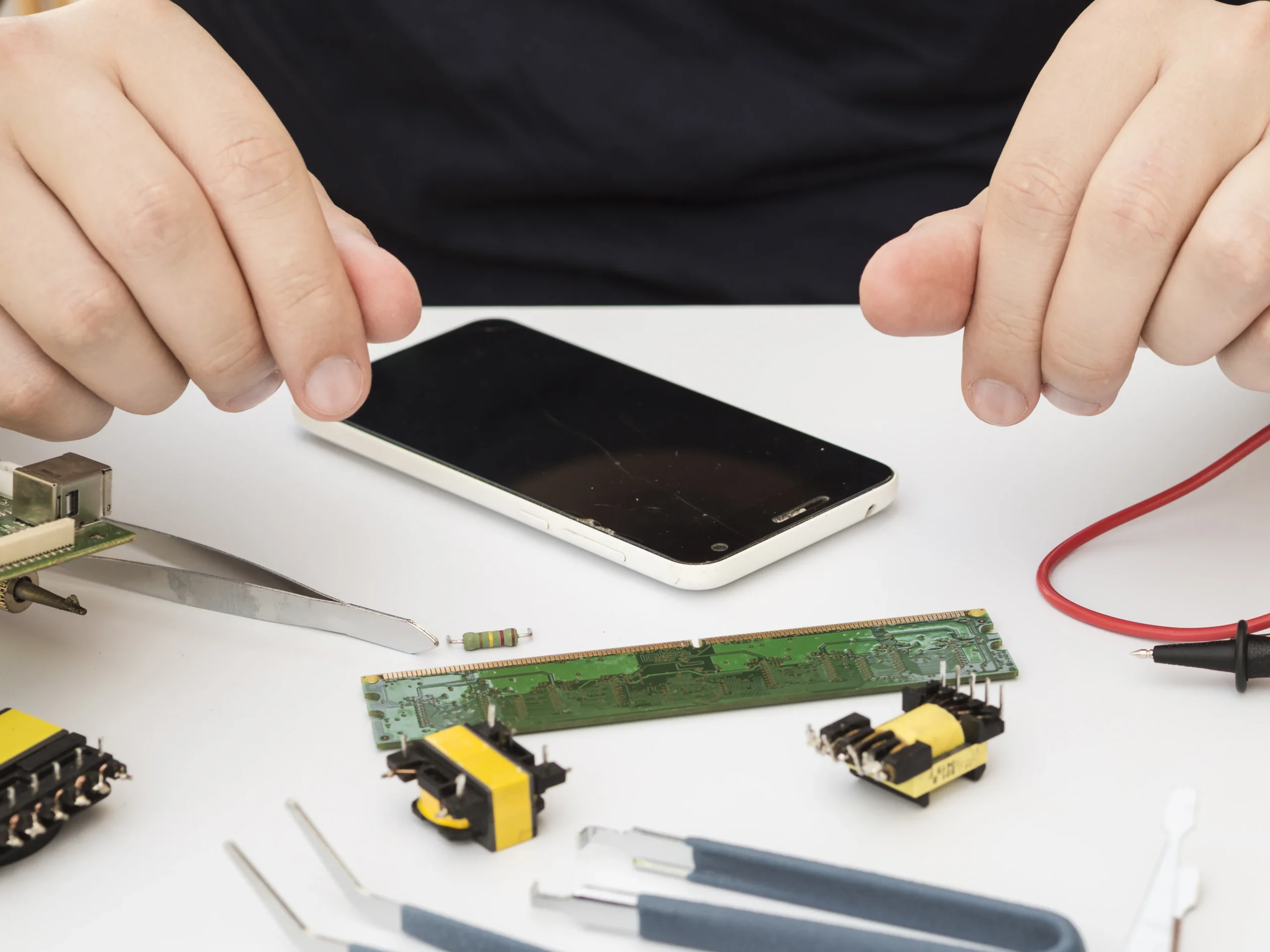
This question comes up constantly in repair workshops, and there's no single right answer — it depends on the device, the fault, the cost, and what matters to the person holding it. What we can offer is a clear framework for thinking it through.
We're an independent repair workshop, which means we benefit financially from repairs — so we have an incentive to be transparent here. When a repair genuinely isn't worth doing, we'll tell you that. The same logic applies in this article.
Start with the repair cost as a percentage of replacement value
The most common benchmark people use — and it's a reasonable starting point — is whether the repair cost represents more than 50% of what the phone is worth. If a phone would fetch £80 on the second-hand market and a screen repair costs £90, the maths don't add up unless you have particular reasons to want to keep that specific device.
The challenge is knowing what a phone is actually worth. Market value changes continuously, and it's worth checking recent completed listings on platforms like eBay rather than just asking prices, which can be misleading. The condition of the phone matters significantly — a device in good condition will be worth notably more than one with accumulated wear and damage.
This benchmark is a guide, not a rule. There are good reasons to repair a phone even when the cost is high relative to its market value, and reasons to replace even when a repair would be cheap. The value calculation is just one input.
Consider the age and expected remaining lifespan of the device
A phone that's two years old has, under reasonable conditions, probably got two or three more years of useful life — particularly if it's a mid-to-high-end model that continues to receive software updates. Repairing it makes a lot of sense in that context.
A phone that's five or six years old is a more complicated calculation. The hardware may still function, but software support from the manufacturer often ends around this point, which means the device will stop receiving security updates. For many people, a phone that no longer receives security updates represents a risk they'd rather avoid — particularly if they use it for banking or work purposes.
It's worth checking directly with the manufacturer when software support ends for a specific model if this is a concern. Some manufacturers are more forthcoming than others about their update policies.
Think about what's actually wrong
Not all faults are equal when making this decision. Some are straightforward and reliable to fix; others are inherently uncertain or may signal broader problems.
Screen damage is usually a good candidate for repair. A cracked screen is a defined, contained problem — replacing it generally restores the device fully, and a good-quality screen repair on a well-maintained device can give you years more use.
Battery degradation is also a reasonable repair, and often one of the best value ones. A battery replacement is typically relatively affordable, and the improvement in day-to-day usability can be dramatic.
Water damage is less predictable. A phone that has had significant liquid exposure may appear to work after drying out, but corrosion can develop on internal components over weeks or months and cause intermittent failures later. We'll always be honest with you about what we find in a water-damaged device and what the realistic outcome of a recovery attempt looks like.
Logic board faults — problems with the main circuit board — are the most complex category. In some cases they're repairable, but the cost can be high and the outcome is less certain. If a phone has multiple faults, or a combination of hardware and software issues, replacing it may be the more sensible path.
What about the data on your phone?
This is a factor that often gets overlooked. If the phone contains photos, messages, or contacts that haven't been backed up, the calculus changes. A device that would otherwise be written off as not worth repairing suddenly becomes important enough to attempt a repair — at least to recover the data.
This is also a good moment to mention that regular backups (to iCloud, Google Photos, or a local backup) remove this concern entirely. If everything is already backed up, the decision about the phone itself becomes purely financial and practical.
The environmental case for repairing
Manufacturing a new smartphone requires substantial resources — rare earth minerals, energy, and complex supply chains. Extending the life of an existing device by repairing it is genuinely better for the environment than replacing it, and this is increasingly something people factor into their thinking.
We're not suggesting guilt-tripping yourself into a repair that doesn't make financial sense. But if the decision is genuinely borderline — the cost is manageable, the device is otherwise in good shape — the environmental dimension is worth factoring in.
When replacing makes more sense
There are situations where replacing genuinely is the right choice, and we'll say so when that's our honest assessment:
- The repair cost is high and the device is already showing signs of multiple hardware issues. One fix may not be the end of the problems.
- The device is old enough that it no longer receives security updates, and you use it for sensitive purposes.
- The device has sustained severe physical damage — a badly bent frame, for example — that would affect the quality of any repair.
- The fault is with the logic board and the likely repair cost is significant relative to the device's value.
- You have strong practical reasons to want a different device — your needs have changed, or there are features in newer models that would genuinely benefit you.
Getting an honest assessment
If you're genuinely unsure, the most useful thing is often to bring the phone in and have someone look at it properly. We offer diagnostic assessments that will give you a clear picture of what's actually wrong and what the realistic options are — including whether we think a repair is genuinely worth pursuing.
We won't push you towards a repair if replacement makes more sense for your situation. Our approach is to give you the information you need to make the decision yourself.
Not sure whether your device is worth repairing? Bring it in for an assessment and we'll give you a straight answer.
Book a Diagnostic